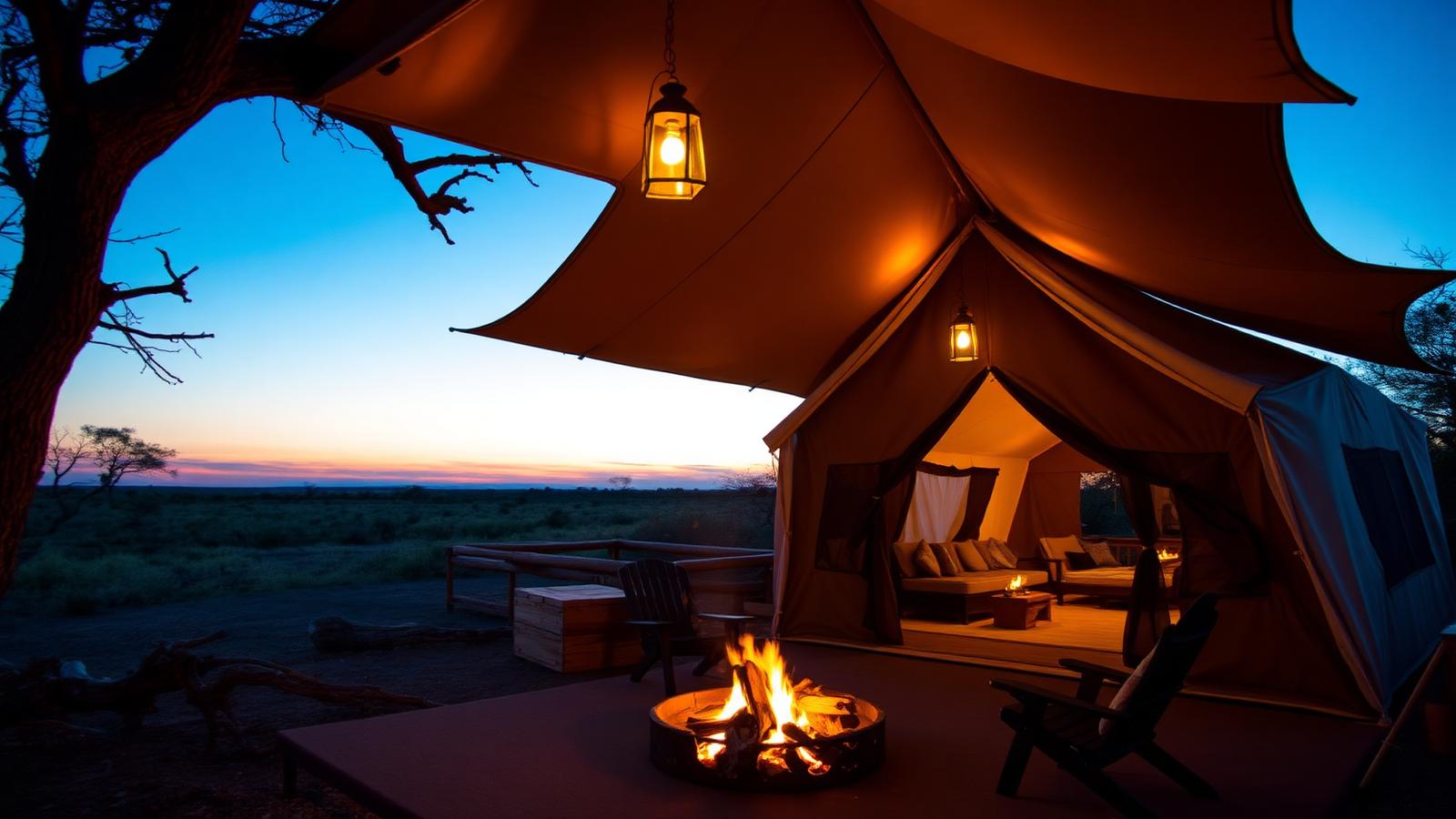
Tented safari camp at dusk

Inspiration & Planning

Before you go

Four things worth reading before you commit to dates: the practical essentials, where you will sleep, the style of trip that suits you, and what changes for returning guests.

Planning Essentials

01

Planning Essentials

Everything that has to be settled before the first game drive: timing, paperwork, packing and health.

Your first safari
Fewer parks, more nights. Three nights in one place beats one night in three, every time.
What to pack
Neutral layers, a warm jacket for dawn drives, soft duffel bags for light aircraft, and binoculars you will actually use.
Visas and entry
Most nationalities need an approved electronic travel authorisation before boarding. Apply at least a week ahead.
Health and safety
Antimalarials for most parks, yellow fever certificate if arriving from an endemic country, and a guide who is radio-linked all day.
Where to Stay

02

Where to Stay

Camps, lodges, private houses and city hotels, sorted by what they actually cost and what they actually deliver.

Luxury
Low-density conservancy camps and private houses with a dedicated guide, vehicle and chef.
Mid-range
Established tented camps and lodges with en-suite bathrooms, good food and shared drives.
Budget
Well-run permanent camps outside the gates. Simple, clean, and the difference between going and not going.
Private houses
Whole-property bookings for families and celebrations, with flexible drive times and menus.
Leopard resting in an acacia tree
Safari Style

03

Safari Style

Six ways people travel with us. Filter by the one that matches your trip.

Family travel

Interconnecting rooms, shorter drives, guides who are good with children.

Honeymoon & romance

Private dining, bush breakfasts, and camps that leave you alone.

Celebrations & milestones

Whole-camp takeovers for birthdays, anniversaries and reunions.

Solo travellers

Small-group departures with no single supplement on selected dates.

Couples & friends

Shared vehicles, split itineraries and flexible pace.

Special interest

Birding, photography, conservation and walking-led itineraries.
Returning Guests

04

Returning Guests

If you have travelled with us before, the second trip should not look like the first.

Loyalty
Returning guests receive a standing five per cent reduction and first refusal on peak crossing dates.
What is new
Two new conservancy partners in Mara North and a walking-led Tsavo West itinerary.
Go deeper
Northern Kenya, Samburu and Laikipia itineraries are available on request.

FAQ

Questions we are asked

When is the best time to visit Kenya?
June to October is dry and reliable, and the migration is in the Mara from roughly July. January to March is hot, clear and excellent for big cats with fewer vehicles.
How far in advance should I book?
For July to October in the Mara, nine to twelve months. For most other months, three to four is comfortable. Resident weekends can often be confirmed inside a week.
Do you offer resident rates?
Yes. Kenyan citizens and residents pay resident park fees and resident camp rates on the entire Kenyan Resident Tours track, priced in shillings.
Is a safari safe for children?
Yes, with the right camps. Most properties accept children from six, and several have family units and dedicated child guides. We only place families where that is true.
How do I pay?
We confirm your itinerary by email and issue an invoice with bank transfer and mobile money details. Card and online payment options are being added.
What happens if I need to change dates?
Date changes made more than sixty days out are usually free of charge, subject to camp availability. We set out the exact terms in your quote.